Search has changed a lot, and most businesses have felt it.
Not too long ago, the path was fairly simple. Someone typed a question into Google, clicked a result, and read a website. Today, that same person might skim an AI summary, ask a voice assistant, check local listings, watch a video, compare a few brands, and then decide which website is actually worth opening.
So no, search engine optimization has not become less important. In many ways, it has become more important because people are more selective now.
A website has to do more than show up. It needs to be useful when people arrive. It should load quickly, explain things clearly, feel trustworthy, and make it easy for visitors to find the next step.
That is why advanced SEO strategies matter. Keywords still have a place, but they are not enough on their own. Businesses also need strong content, clean technical foundations, smart internal linking, useful visuals, better page experience, relevant backlinks, and regular updates.
A good latest SEO strategy should not be built around chasing every trend. It should make your website stronger over time, even as search results, ranking systems, and user habits continue to shift.
How SEO Has Changed
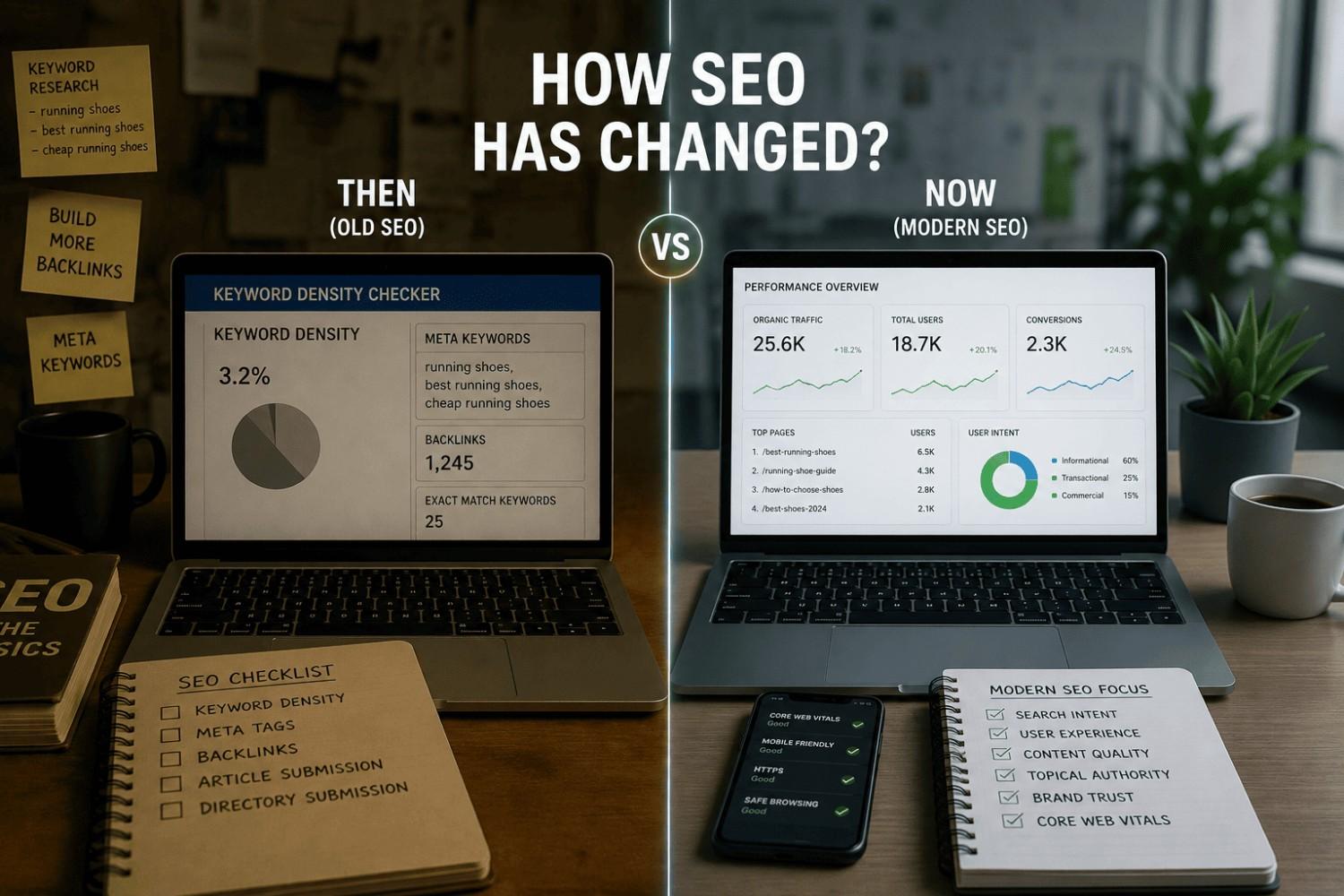
In the early days, search engine optimization was much easier to manipulate. Many websites repeated the same phrases over and over, filled pages with meta tags, and cared more about adding keywords for your website than writing something useful.
For a while, that approach worked.
It also made search results messy. Some pages ranked well even though they were thin, awkward, or written almost entirely for search engines.
As the Google algorithm improved, that kind of work became less effective. Search engines became better at understanding quality, relevance, links, trust, and user intent. Copied content, spammy backlinks, and forced keywords slowly lost their power.
Today, search engine optimization is much broader. It includes page speed, mobile usability, crawlability, accessibility, internal linking, structured content, backlinks, and visitor behavior once they land on a page.
That is why SEO often needs input from more than one person. Writers, marketers, developers, designers, and technical SEO specialists all affect how well a website performs. A page can have good writing and still struggle if the site is slow, the layout is confusing, or the structure makes it hard for search engines to understand.
Real expert SEO is not about tricking the system. It is about making a website clearer, easier to use, and more helpful than the other pages competing for the same search.
What Is an SEO Strategy?
A complete SEO strategy is a practical plan for improving organic search performance. It usually includes keyword research, content planning, technical improvements, internal linking, backlink building, tracking, and ongoing content updates.
But the starting point should not be a tool. It should be the audience.
Who is searching? What are they trying to solve? What questions do they ask before they call, buy, compare options, or fill out a form?
Once those questions are clear, search engine optimization becomes much easier to direct.
An expert SEO approach connects rankings with business goals. More traffic sounds good, but it only matters when it brings the right people to the website. The right pages should improve website visibility, answer real questions, and guide visitors toward a clear next step.
A strong content optimization strategy also keeps the page comfortable to read. Headings should sound natural. Paragraphs should not feel heavy. The page should answer what people came for without sounding like it was written just to tick boxes.
That is where SEO best practices are useful. They give the work structure, but they should never make the content feel stiff or unnatural.
Do SEO Strategies Help in the Long Run?
Yes, advanced SEO strategies can support long-term growth because SEO builds value gradually.
Paid ads can bring traffic quickly, but that traffic usually slows down when the budget stops. SEO works differently. A useful page can keep bringing visitors as long as it stays accurate, relevant, and competitive.
Take a small e-commerce store that sells eco-friendly products. It may struggle to rank for a broad keyword like “toothbrush.” A phrase like that is crowded and usually dominated by larger websites.
Instead, the store may use strategic keyword SEO insights to focus on a more specific term, such as “Organic toothbrush.”
The search volume may be smaller, but the intent is often stronger. Someone searching for that phrase usually knows what they want.
With useful product pages, helpful blog content, advanced on-page SEO, strong internal links, and relevant backlinks, the store can build steady organic SEO traffic over time.
A complete SEO strategy also helps people become familiar with a brand. When users keep seeing your website while they research products, services, comparisons, and answers, your business starts to feel more reliable.
That is why a flexible, latest SEO strategy matters. It keeps your website improving instead of relying on one round of optimization and hoping it lasts.
Common SEO Problems Businesses Face
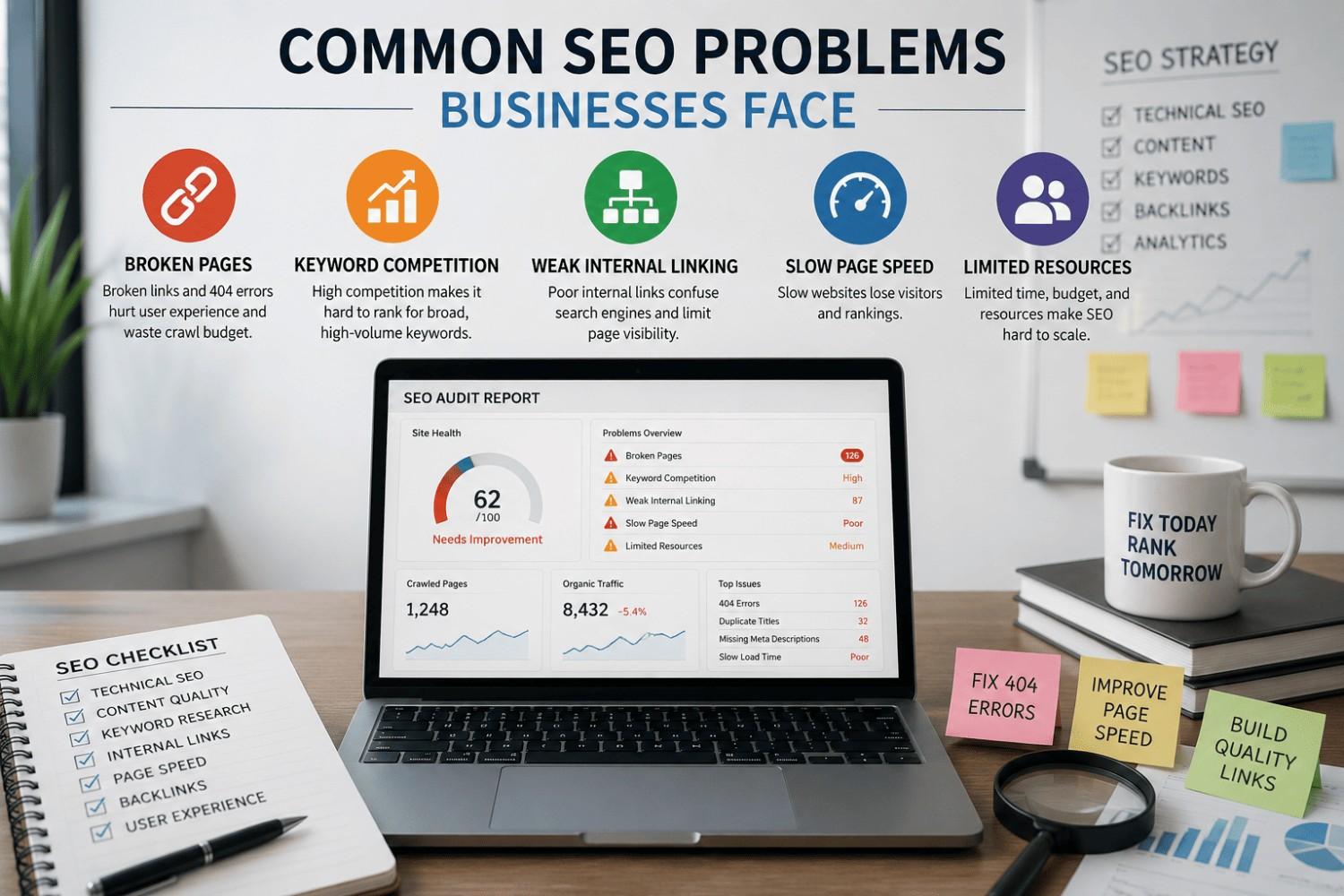
1. Broken Pages
Broken pages are easy to overlook. They usually appear when a page is deleted, a URL changes, or an old internal link points to something that no longer exists.
From a search engine optimization point of view, this causes two problems. Visitors end up on 404 pages, and search engines spend time crawling URLs that no longer add value.
The fix is not complicated, but it does need regular attention. Check for broken URLs, update internal links, and use 301 redirects when there is a relevant replacement page.
2. Keyword Competition
Keyword competition can slow down progress, especially for smaller businesses. Large websites often dominate broad, high-volume terms because they already have authority, backlinks, and a deep library of content supporting them.
That does not mean smaller businesses have no chance. It just means they need to be more specific.
Use advanced keyword research SEO tips to find long-tail phrases, local searches, comparison terms, and customer questions. These keywords may bring less traffic, but they often bring people who are more likely to take action.
It also helps to look for gaps in competitor content. Maybe their page is too general. Maybe it avoids a question customers often ask. Maybe it gives no examples. Those small gaps can become strong opportunities.
3. Weak Internal Linking
Internal links help visitors move through your website. They also help search engines understand how your pages connect and which ones matter most.
A blog post should not be left on its own. When it makes sense, it should link to related service pages, FAQs, guides, case studies, or location pages.
Good internal linking keeps people engaged and gives important pages more support. It also makes the website feel organized instead of scattered.
4. Slow Page Speed
A slow website loses people quickly. Most visitors will not wait around for a heavy page to load, especially on mobile.
Large images, extra scripts, weak hosting, too many plugins, and messy code can all slow a site down. From an expert SEO perspective, speed affects more than rankings. It affects trust, leads, sales, and the overall user experience.
Compress images. Remove scripts you do not need. Use caching. Upgrade hosting when needed. And test the website on a phone, not only on a desktop. To know the best Image SEO practices, you can also refer to Google’s Image Best SEO Practices.
5. Limited Resources
Many businesses know SEO matters, but they do not always have a large team, a big budget, or enough time. That makes content writing, keyword research, technical checks, and link building harder to keep up with.
The best approach is to prioritize.
Start with pages that already get traffic or have strong lead potential. Then move on to technical fixes, old content updates, and organic SEO tasks that can keep producing value.
Trying to do everything at once usually creates more stress than progress. A smaller, steady plan often works better.
10 Strategic SEO Insights and Tactical Tips
1. Use AI Carefully
AI can be useful, but it should not run the entire SEO process.
AI tools for website SEO can help with topic research, outlines, keyword grouping, competitor checks, and technical reviews. They can make the early stages of work faster.
The problem comes when businesses publish AI-written pages without adding real experience or detail. Those pages may sound clean, but they often feel empty. Readers can usually tell when a page says the same thing as every other page on the topic.
Use AI as support, not as the final voice. Add real examples, customer questions, screenshots, expert comments, opinions, and brand-specific details. This is where expert SEO still makes a clear difference.
2. Give Readers the Answer Faster
People skim before they read. That has always been true, but it matters even more now because search results often show quick answers before someone clicks through.
Do not hide the main point under a long introduction. Give readers the useful answer early, then explain it in more detail.
For example, if a blog explains how to fix a slow WordPress website, mention the main fixes near the top: compress images, reduce plugins, enable caching, improve hosting, and remove unnecessary scripts.
That is practical search engine optimization. It helps readers understand the page faster and makes the content easier for search systems to interpret.
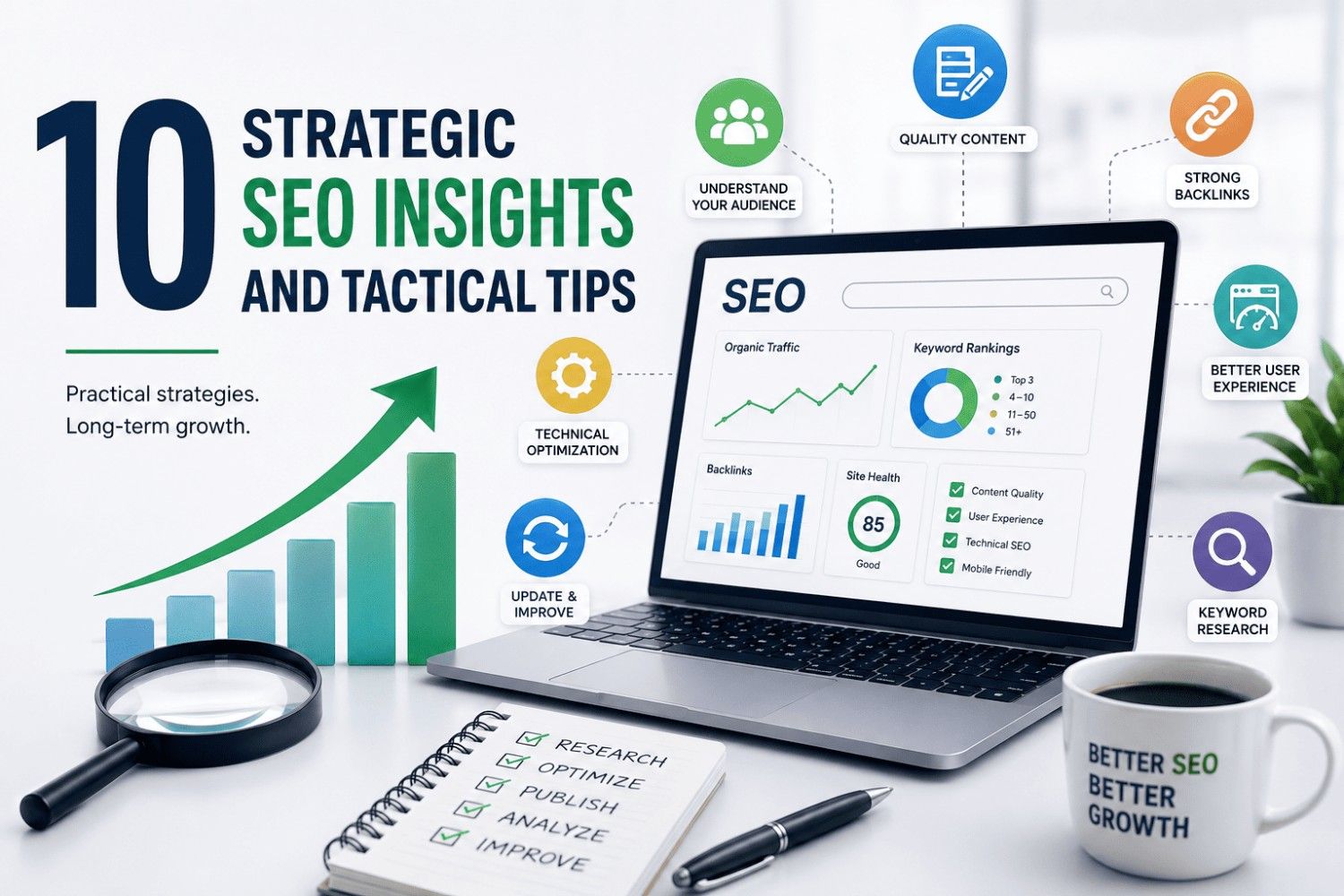
3. Understand the Audience Better
Audience research is not just about search volume. It is about understanding how people describe their problems.
Look at customer emails, sales calls, reviews, search queries, comments, and contact forms. Pay attention to repeated questions. Notice where people hesitate. Notice the exact words they use before they are ready to buy.
Some of the best search engine optimization tools, such as Google Search Console and Google Analytics, can show useful patterns. But tools do not tell the whole story. Real customer language often leads to stronger content ideas.
That is why advanced SEO strategies work best when data is combined with actual business knowledge.
4. Update Old Content
Old content can lose rankings for many reasons. The information may be outdated. A competitor may have published something stronger. Search intent may have changed. The examples may no longer feel current.
Important pages should be reviewed regularly. Update old examples, improve headings, check metadata, add internal links, refresh FAQs, and remove anything that no longer helps the reader.
An old tool roundup or outdated service guide should not sit untouched. Visitors notice stale information quickly.
Not every update has to be major. Sometimes a page only needs clearer answers, better structure, and a few current details.
5. Make the Website Easier to Use
User experience matters because people will not stay on a confusing website.
Ask simple questions. Does the page load quickly? Is it easy to read on mobile? Are the headings clear? Is the call to action easy to find? Can users move to the next helpful page without going back to Google?
Good UX supports SEO best practices. Short paragraphs, clean navigation, useful headings, readable fonts, and simple forms can improve both usability and conversions.
6. Use Original Images
Original images can make content feel more useful and more trustworthy. Screenshots, diagrams, product photos, charts, infographics, and simple custom graphics can often explain an idea faster than text.
Stock photos are easy to use, but they usually add very little. A custom image that supports the topic is often far more helpful.
Use descriptive file names, write clear alt text, and compress images before uploading them. Place visuals close to the section they explain. This helps with speed, accessibility, and image search performance.
7. Build Better Backlinks
Backlinks still matter, but weak links are not worth chasing. A few relevant links from credible websites are much better than a pile of low-quality ones.
A strong backlink strategy for SEO starts with content worth referencing. That could be original research, detailed guides, expert opinions, useful tools, or practical industry resources.
Guest posting, digital PR, partnerships, and outreach can help when they are done properly. Avoid buying links or joining low-quality networks. Those shortcuts can create bigger problems later.
8. Fix Keyword Cannibalization
Keyword cannibalization happens when two or more pages target the same topic or search intent. Instead of supporting each other, those pages compete.
This can confuse search engines. One page may rank for a while, then another replaces it, and neither performs as well as it should.
Run a regular website SEO audit to find overlapping pages. Merge similar content when needed, redirect weak pages, adjust internal links, and make sure every important page has a clear purpose.
9. Watch Algorithm Changes Without Overreacting
Search rankings move. Sometimes it is because of an update. Sometimes a competitor improved their content. Sometimes the intent behind a keyword changed.
The worst response is to panic and rewrite everything at once. A better response is to look at the data.
Which pages dropped? Which queries changed? Did impressions fall, or only clicks? Are competitors answering the topic better? Has the page become outdated?
Search engine optimization is not a one-time task. Strong websites are usually better prepared for ranking changes because they keep improving content, technical health, user experience, and trust signals over time.
10. Adapt to How People Search Now
Search is more conversational now. People ask longer, more specific questions.
Someone may not search only “best running shoes.” They may search, “What are the best running shoes for flat feet and daily walking?” That type of query needs a clear answer, not a generic list.
Create content that answers real questions. Add FAQs when they are useful. Include examples. Use visuals when they make the topic easier to understand. Keep the page easy to scan, but do not make it shallow.
The websites that perform well will be the ones that give clear answers while still providing enough detail to build trust.
Final Thoughts
SEO is not about shortcuts. It is about building a website that deserves to be found.
Fix broken pages. Improve speed. Update old content. Strengthen internal links. Create useful pages. Earn better backlinks. Keep learning from search data and customer behavior.
OutsourceSEM provides expert SEO support for businesses that want steady online growth. Our services include local SEO, SEO analysis reports, Guest posting, small business SEO, link building, backlink analysis, SEO copywriting, market research, and campaign reporting.
We also support service-based businesses such as plumbing, painting, HVAC, electrical, and flooring companies. With the right digital marketing approach, these businesses can improve local visibility, attract better leads, and build stronger search performance over time.