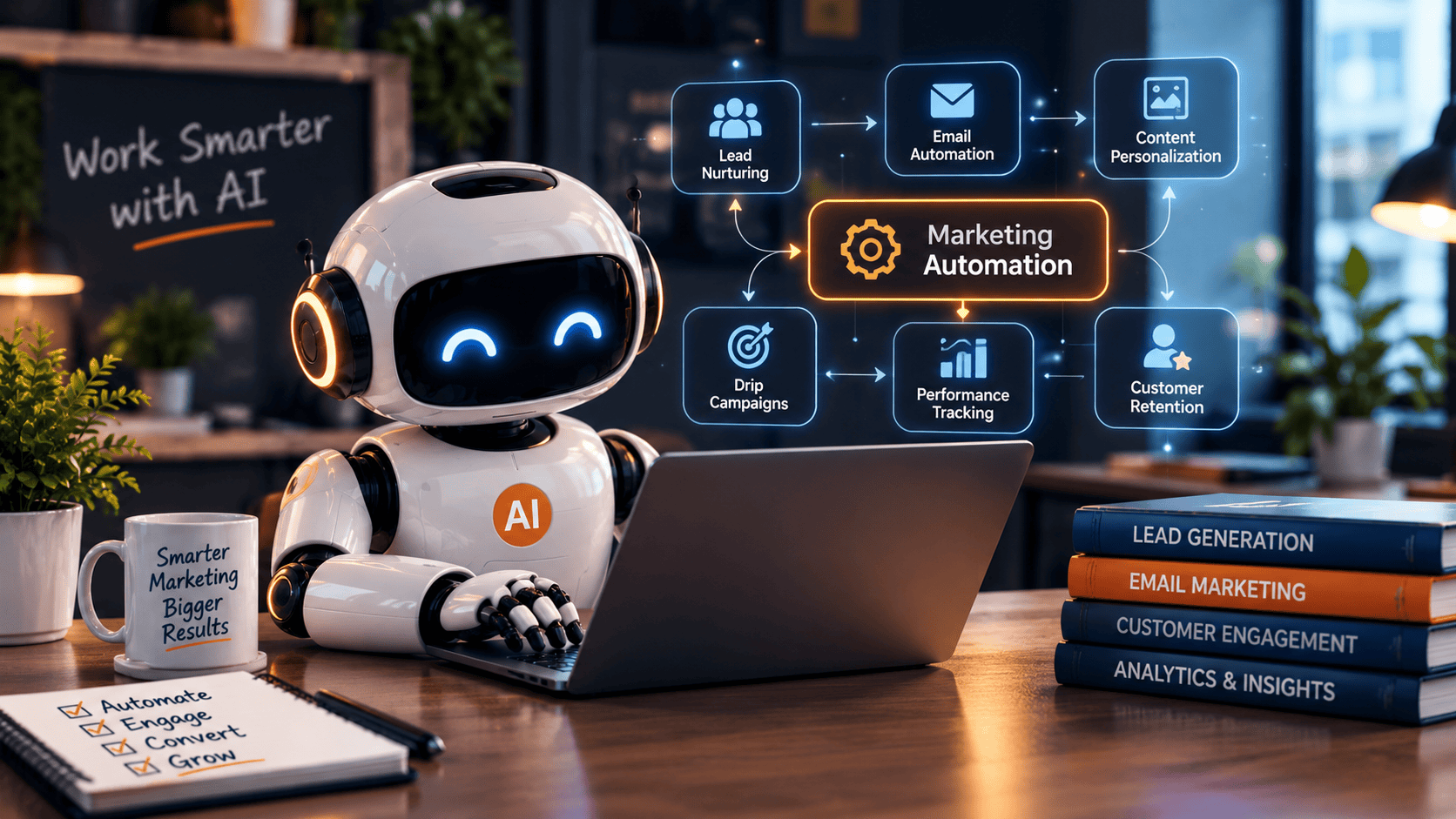
AI marketing automation is moving out of the experimental stage and into the practical tool for businesses to save time, cope with growing workload, and react faster. The aim should not be to automate everything. The optimal way to benefit from AI is to use it in cases of repetitive, data-intensive or rule-based work, leaving people responsible for strategy, creativity, judgment, and customer relationship.
According to HubSpot's 2026 State of Marketing, automation and AI-assisted personalization are among top priorities in marketing. Businesses can leverage AI to automate marketing, but at the same time need to have a well-considered marketing automation strategy to choose what should be automated and what not.
What does AI marketing automation really mean?
AI marketing automation consists of automation rules and artificial intelligence that allows completing or assisting marketing tasks without much manual labor. While traditional automation will send an email after the form submission, the AI-powered solution can summarize the lead, understand his intent, provide suggestions on how to act, classify the contact, and provide guidance about next steps.
That is why AI marketing tools are very helpful in content, email, paid media, analytics, social media, SEO and lead management tasks. They help to analyze information and convert routine actions into workflows.
However, automation should solve a problem. Prior to automating any tasks, businesses should determine the task itself, desired outcome, data required for the task, and the moment when a human will need to review and approve the output.
Automate repetitive content preparation
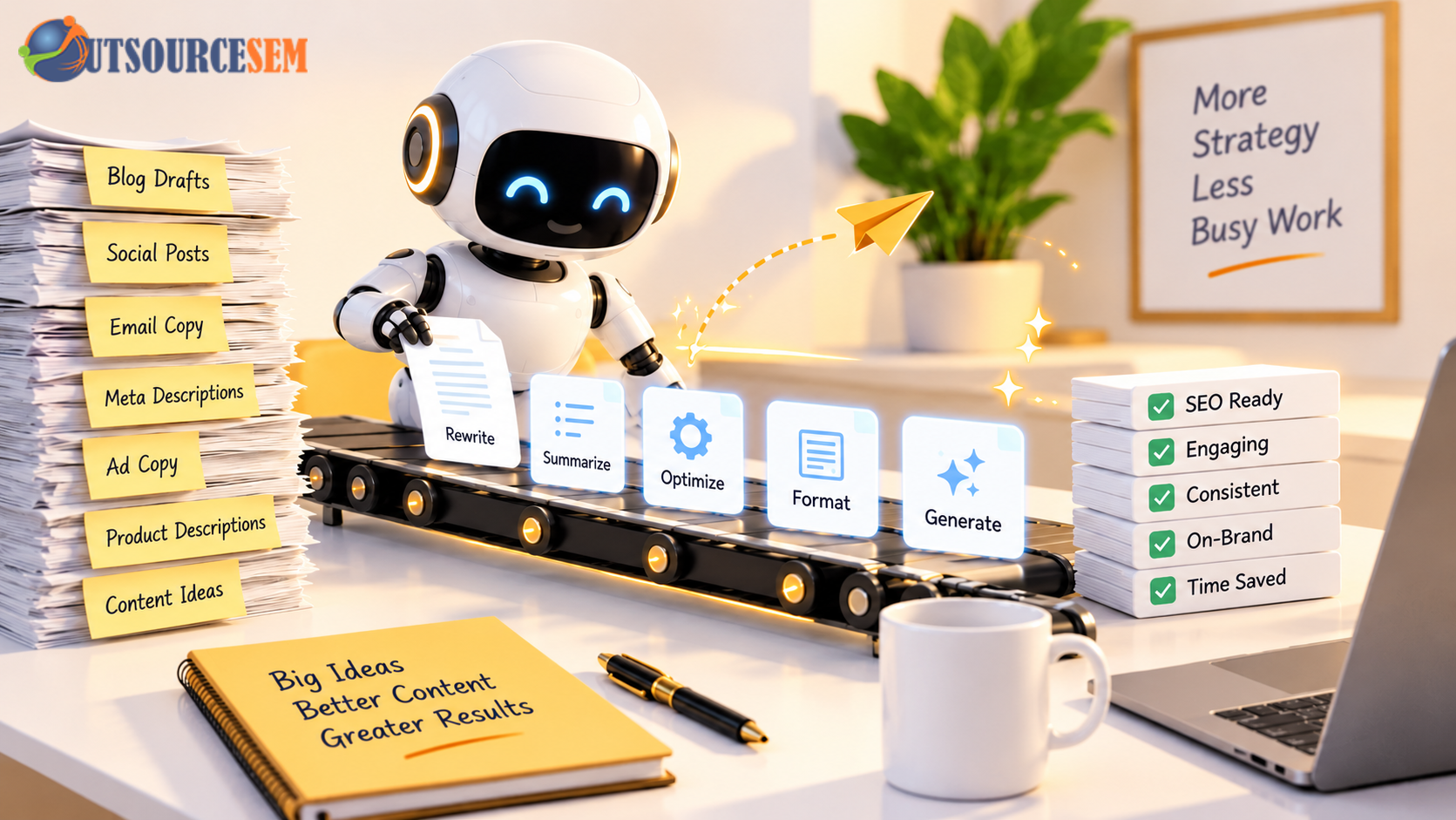
Content teams waste much time on tasks that support the creative process but do not require creativity themselves. AI can automatically produce first draft outlines, summarize the research, transcribe the transcript into notes, create headlines' variations, repurpose the long-form content, and apply one idea in several channels.
It does not mean that businesses should automate content publication. Brand voice, factual accuracy, positioning, originality, and customer sensitivity still require human review.
One of possible workflows can start with the interview with an expert. The AI will summarize the discussion, identify main ideas, produce an outline and first draft copy. Marketers will provide real-life examples, check facts, refine the argumentation, and approve the final version.
Businesses can also think about how to apply one idea in several channels without simply duplicating the same material everywhere.
Automate email segmentation and routine follow-ups
Email is one of the most obvious areas for AI marketing automation since there are many repetitive actions in this case.
AI can segment contacts based on their behavior, purchase history, engagement, location, or lifecycle stage. It can suggest subject lines, summarize interaction history, draft follow-up emails and send automatic messages after specific actions like guide downloading and cart abandonment.
Humans still should decide who gets a message, what offer to propose, how often you communicate, and when the process should be stopped.
The sensitive conversation should be moved to a human. Complaints, pricing questions, retention problems, and high value sales opportunities require a context that cannot be transferred to a workflow.
Automate data summaries, not final decisions
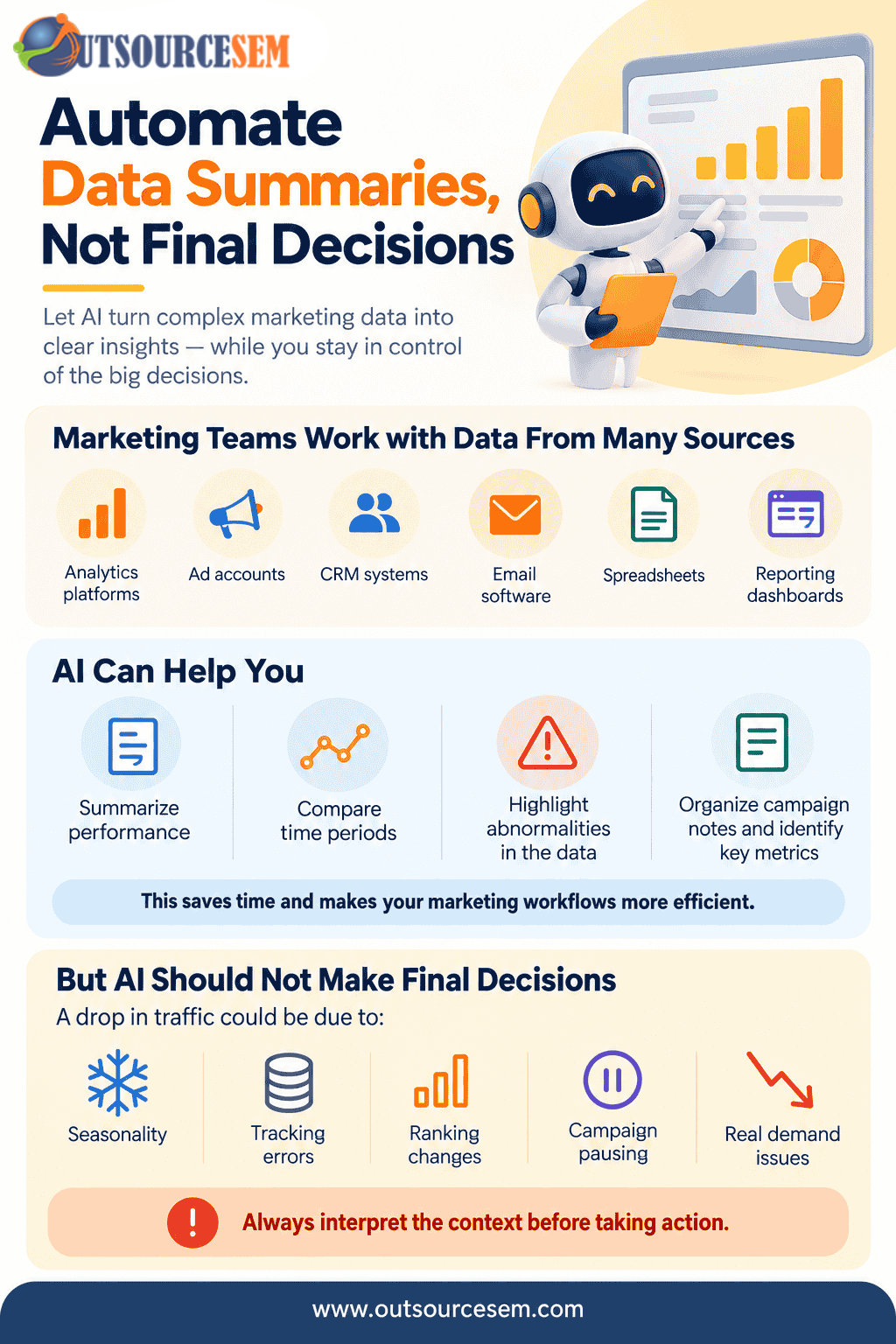
Marketing teams are often overwhelmed by information from analytics platforms, ad accounts, CRM systems, email software, spreadsheets, and reporting dashboards.
AI can summarize the performance, compare time periods, highlight any abnormalities in the data, organize the notes of campaigns and identify important metrics. It is one of the most practical applications of AI for marketing workflows since it helps to save time on information assembling.
However, AI should not make decisions regarding the budget or strategy without additional reviews. Decline in traffic can be caused by seasonality, tracking errors, ranking changes, campaign pausing, or real demand issues. Marketers should interpret the context before doing something.
Automate paid media support carefully
Paid advertising already includes lots of automation. AI can produce ad variations, analyze the audience, summarize the search terms, suggest creative directions and help with bidding or budget optimization.
Businesses need some guardrails here. Campaign objectives, profit margins, geographic prioritization, brand safety, offer strategy and acceptable acquisition cost should be defined before the AI automates the process. Teams should regularly check the performance and run tests instead of relying on automated suggestions.
Automate social scheduling and repurposing
Social teams constantly resize, rewrite, schedule and repurpose the content, which makes it a good choice for automation.
AI can turn the blog post into short posts, extract key points from the video, suggest captions, make variations for different networks, and plan the publishing calendar.
What should be done by a human in this case? Real-time brand judgment. Sensitive replies, cultural context, breaking news, customer complaints, humor, and controversial topics may change rapidly. AI can prepare the reply, but humans should decide whether it is relevant.
Use AI for lead routing and qualification
Businesses can also use AI marketing tools to reduce time gaps between lead generation and sales follow-up.
AI can summarize the form submission, classify the inquiry, identify high-intent behavior and route the lead to the relevant team. Low-intent leads can be automatically placed into nurturing sequences, and high-value opportunities should be immediately passed to the sales.
Teams should regularly check whether the right opportunities reach the right people.
What marketing tasks should not be fully automated?
Not only it is important for businesses to know what marketing tasks to automate, but also what automation can create unnecessary risks.
Strategy should not be automated since it involves lots of trade-offs, market knowledge and business priorities. Positioning should not be fully automated since differentiation is based on the things a company does better. Factual approval is an important stage especially in case of making legal or reputational mistakes.
Also, the complex customer communication should remain under human control. AI can produce information but empathy, negotiation, accountability, and judgment are necessary in sensitive situations.
How to build a smarter marketing automation strategy
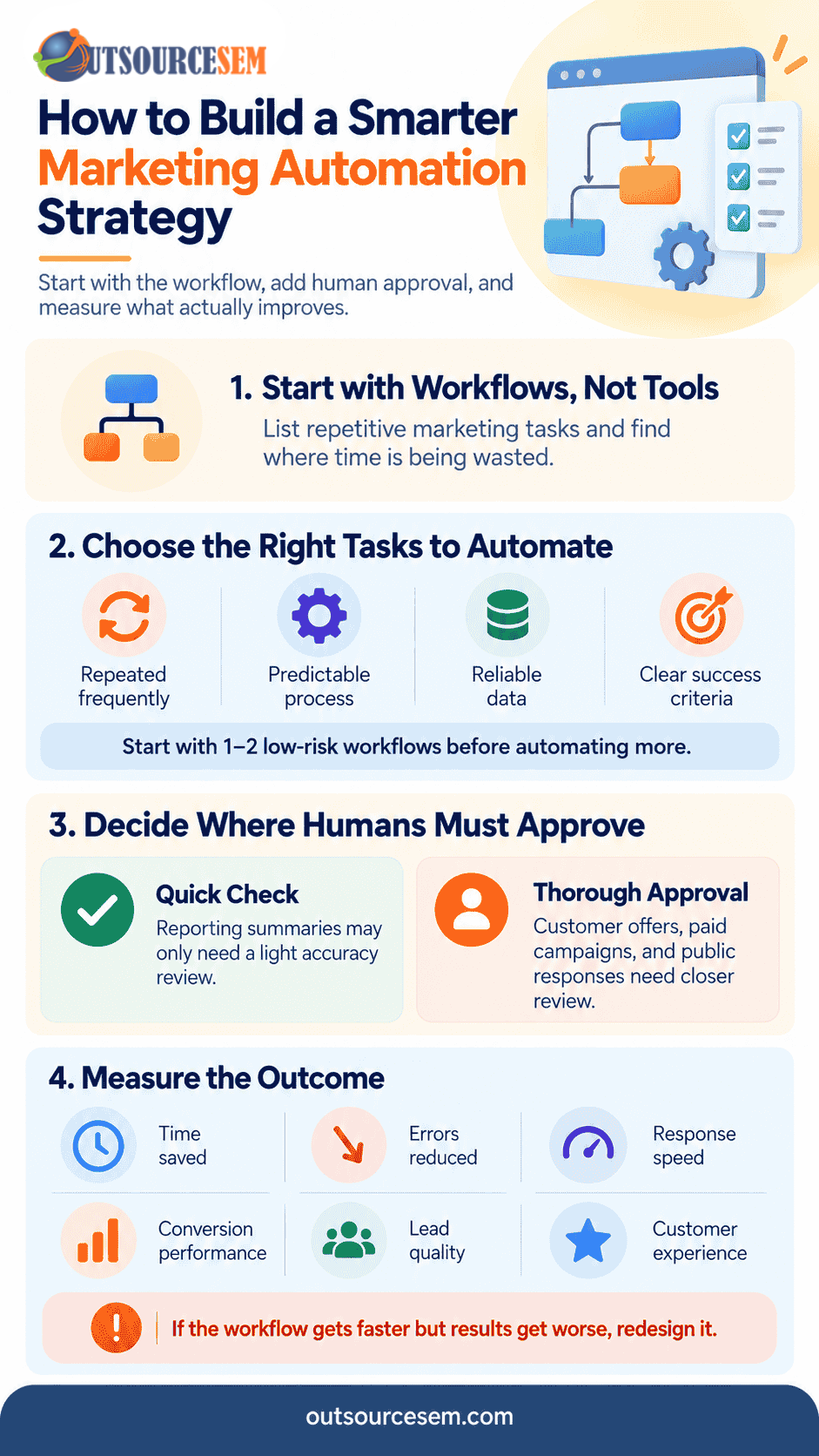
It is important to start with workflows, not tools. Make the list of marketing tasks that your team performs repetitively and find where time is wasted.
The good candidate for automation is the task that is repeated frequently, involves predictable processes, relies on reliable data and has a clear criteria of success. Start with one or two low-risk workflows before automating the whole department.
Next, it is time to decide where human approval is required. Reporting summary may require just a quick accuracy check. Customer-facing offers, paid campaigns, or public response require more thorough approval.
Finally, measure the outcome of your automation. Track the time saved, errors, response speed, conversion performance, lead quality and customer experience. In case the workflow becomes faster but the results become worse, you need to redesign it.
Choose AI marketing tools based on the workflow
The best AI marketing tools are not necessarily the ones that have the most extended features. Choose tools that solve the specific problem, integrate with other systems, protect the customer data, and give people an opportunity to review the important outputs.
Do not choose tools that duplicate the same task, add extra costs or complicate the workflow.
Businesses should document the use of AI. The teams need standards regarding the approved data, human review, brand voice, security, and escalation.
The best automation creates more time for better marketing
AI marketing automation should eliminate busywork, not eliminate marketers.
The most valuable workflows should automate repetitive preparation, organization, analysis, routing, and reporting in order to let people focus on customers, offer improvement, creation of new ideas and decision-making.
Start with one valuable workflow, measure its impact and expand only when it works.
For agencies and businesses that want to automate their marketing processes but preserve the strategy and quality, OutsourceSEM can help with SEO, content, paid media, analytics, reporting, and marketing workflows with measurable results.