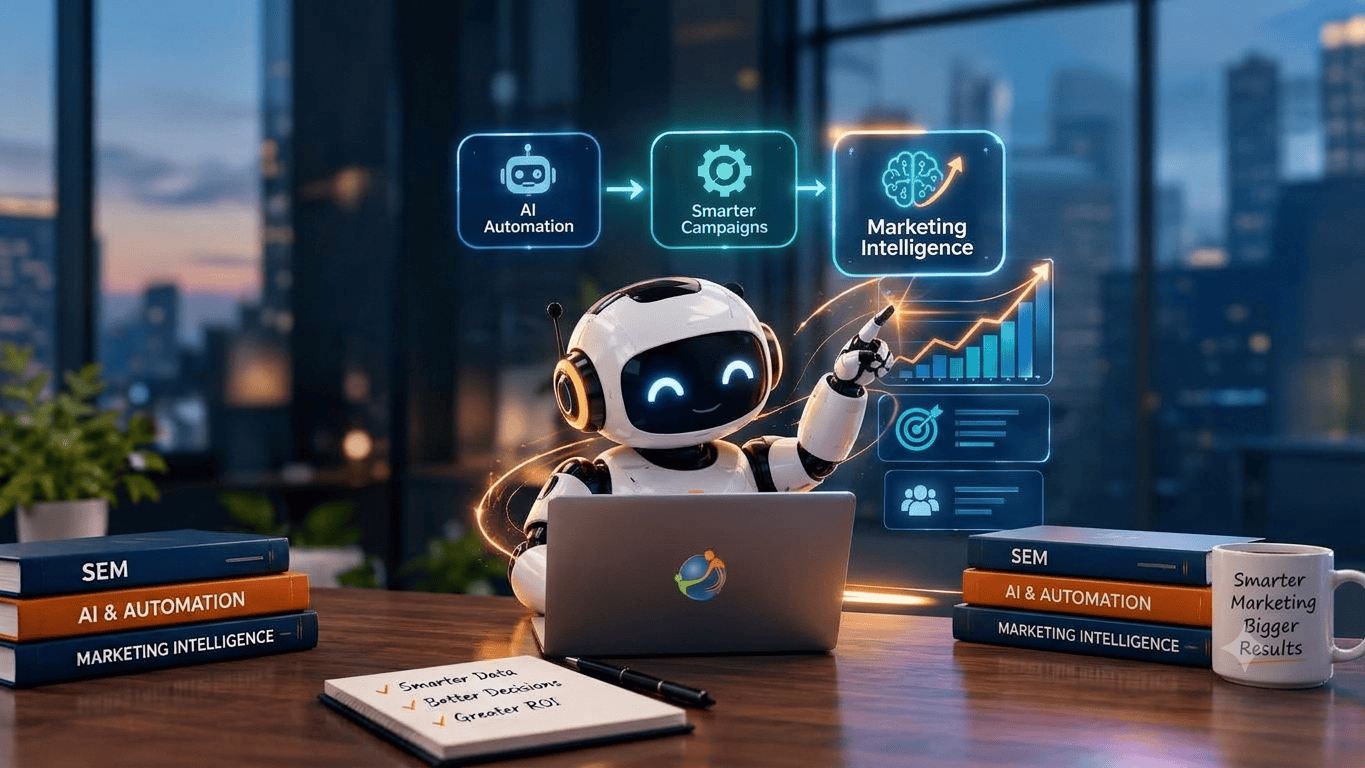
The current state of SEM includes such features of the marketing process as automated bidding, campaign rules, audience targeting, machine generated advertisement. This level of the development of SEM will change soon. The future of SEM is in marketing intelligence for SEM powered by artificial intelligence.
What is marketing intelligence for SEM and why do you need it?
As compared to the concept of automation, marketing intelligence is a more broad term and means collecting and processing information about your search campaigns, analytics platforms, customers' behavior, CRM, competitive research, landing pages, and sales results.
Instead of asking whether it is possible to automate some routine operations, you have to ask questions about why some audience groups become more valuable, why certain searches generate better customers, and where to move your budget next.
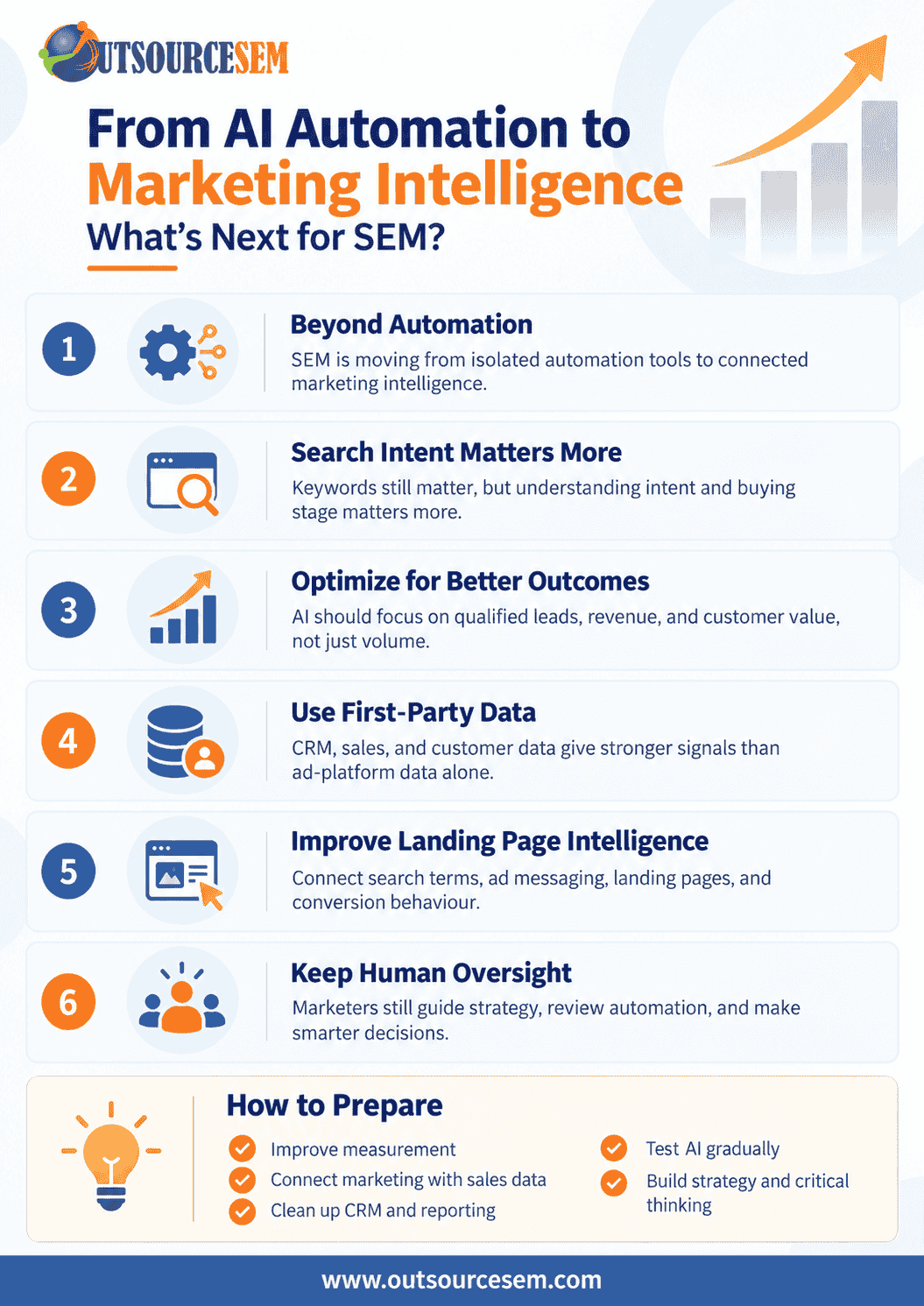
AI-powered search engine marketing will go far beyond standard automation
Most likely, you are familiar with the use of artificial intelligence in paid search. Your business probably uses automated bidding, responsive ads, audience expansion, and campaign recommendations.
The future of SEM will be marked by the connection of all those capabilities. It is no longer enough to use several platforms and applications to conduct SEM. They include keyword research, campaign management, reporting, analytics, customer information.
You are able to analyze the following information: increasing the number of searches for a problem, engagement of specific audience segments in ads related to that problem, comparison of the behavior on landing pages, and purchasing history of those visitors.
It is much more useful than just knowing which keyword attracts more clicks.
In the future of SEM, you will rely not on the adjustment of isolated settings but on the understanding of the relationship between demand, customer behavior, and revenue.
Search intent will get more important than keywords
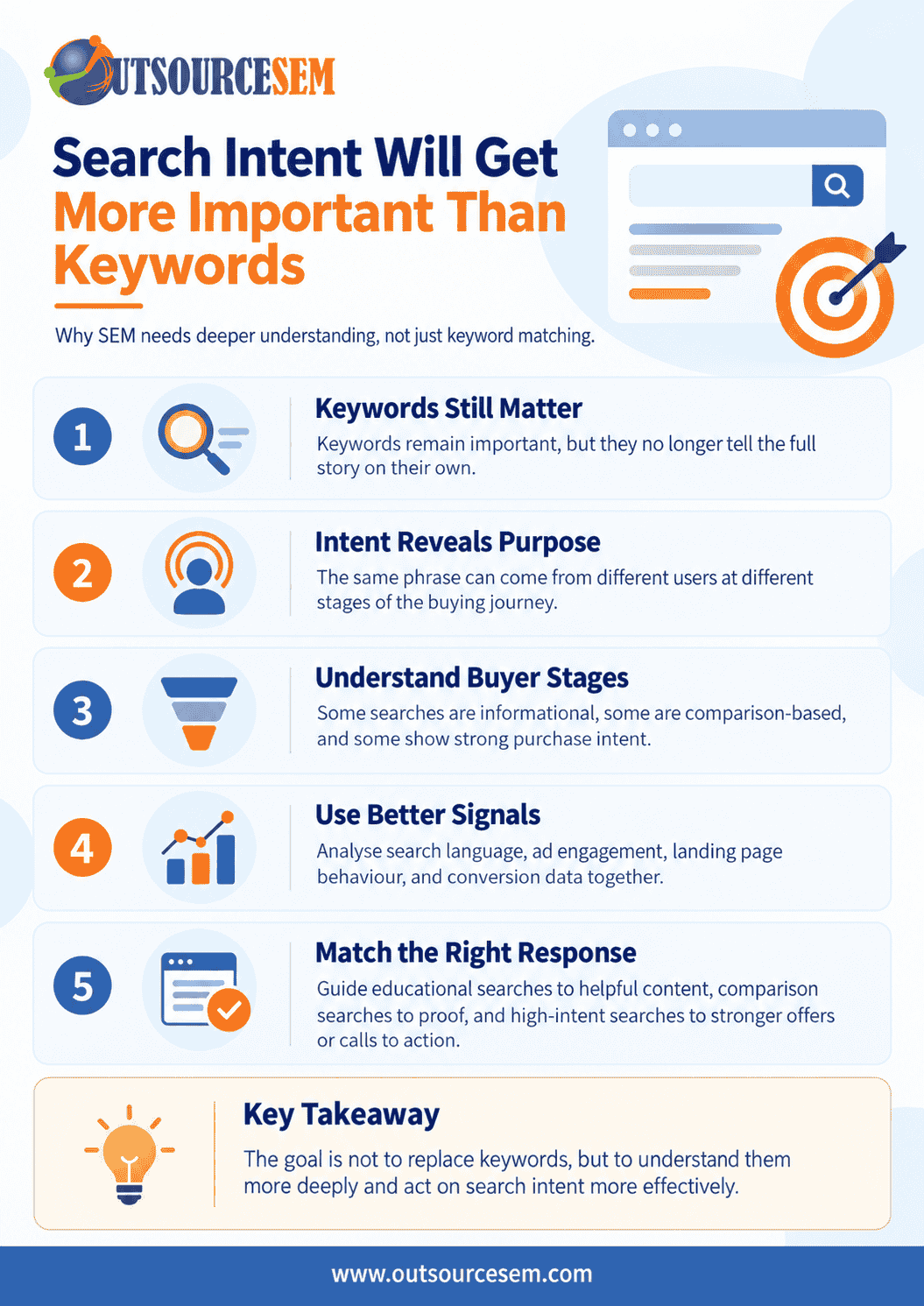
Keywords will play an important role in SEM in the future, but you cannot ignore the purpose behind the search and try to rely only on them.
Two people can use similar phrases, but they can be at different stages of their buying process. One can be in the research stage, another can compare some providers, and third is ready to purchase.
Marketing intelligence will help you to identify these differences by analyzing the language of searches, customer engagement, the previous interactions with customers, the landing page behavior, and conversion data.
You will organize your campaigns in such a way that educational searches will get the informational pages, comparison searches will get the proof or differentiation. Searches with high intent will receive stronger offers or calls-to-action.
The goal is not replacing keywords. It is getting a deeper understanding of them.
AI campaign optimization will become business-focused
One of the main benefits you can achieve thanks to the use of artificial intelligence in search engine marketing is the improvement of the optimization process.
Currently, your attention is drawn to such metrics as the cost per click, conversion rate, cost per acquisition, return on ad spend. All those metrics are useful, but they cannot always tell you whether your campaign attracts the right customers.
AI campaign optimization becomes more valuable when advertising platforms receive stronger signals from you.
For example, there are two campaigns. Both campaigns produce one hundred leads. The first one produces twenty qualified opportunities and the other produces only five. If you focus the optimization only on the number of leads, then the system will continue investing in the second campaign.
Connection of campaign data with CRM, sales, revenue information will change the situation. You will be able to analyze which keywords, audiences, ads, and landing pages contribute to qualified leads, purchases, repeat customers, high-value accounts.
Your optimization will focus not on production of more activities but on production of better outcomes.
First-party data in SEM will get more important
The collection of useful information by businesses happens directly by the use of websites, CRM systems, purchases, subscriptions, customer interactions, and sales processes.
First-party data in SEM will give you context that cannot be received from advertising platform data.
For example, an advertising platform knows that someone has submitted a form. You also know whether that person became the qualified lead, purchased something, repeated purchase, or generated significant revenue.
First-party data will help you to understand which audiences are the most valuable, which search behaviors happen before a sale, which campaigns build the stronger customer relationships.
You have to manage this information properly. Data has to be collected correctly, stored in a secure place and used according to your company's policies. Better intelligence depends on better data quality.
Landing page intelligence will become a part of SEM
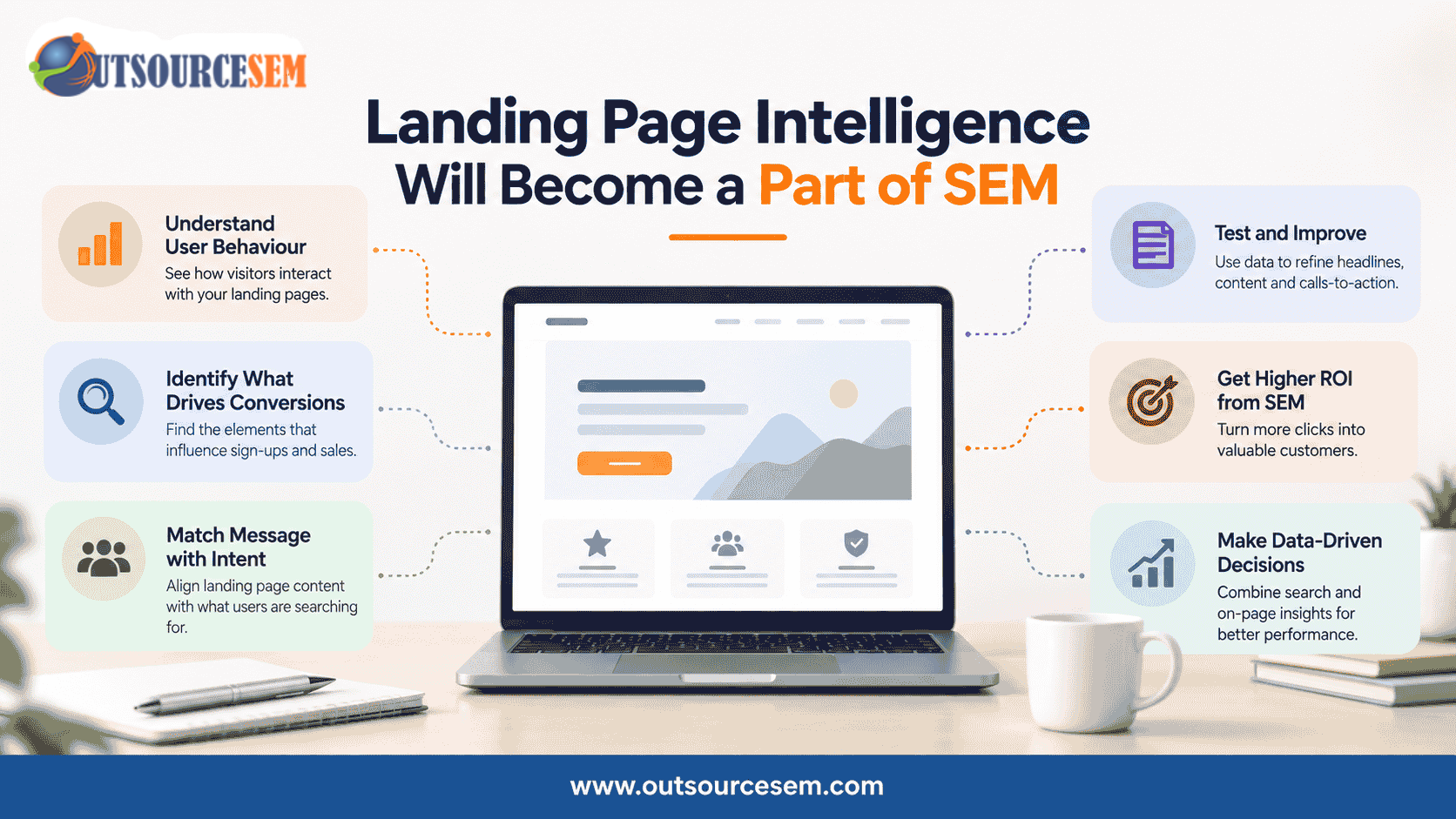
SEM optimization cannot stop when someone clicks an ad. The experience after the click often decides whether your traffic will become revenue.
Marketing intelligence will allow you to connect search intent, ad messaging, landing page engagement, conversion behavior.
Your campaign can have a high click-through rate but low conversion. The use of AI-assisted analysis will show you that visitors from certain searches leave quickly as your landing page doesn't answer the need expressed in the query.
You will be able to improve the matching of search term, ad, landing page, and offer. This will give you a more connected approach to paid search and conversion optimization.
This transition will reward those who connect insight with action.
Human oversight in SEM will become crucial
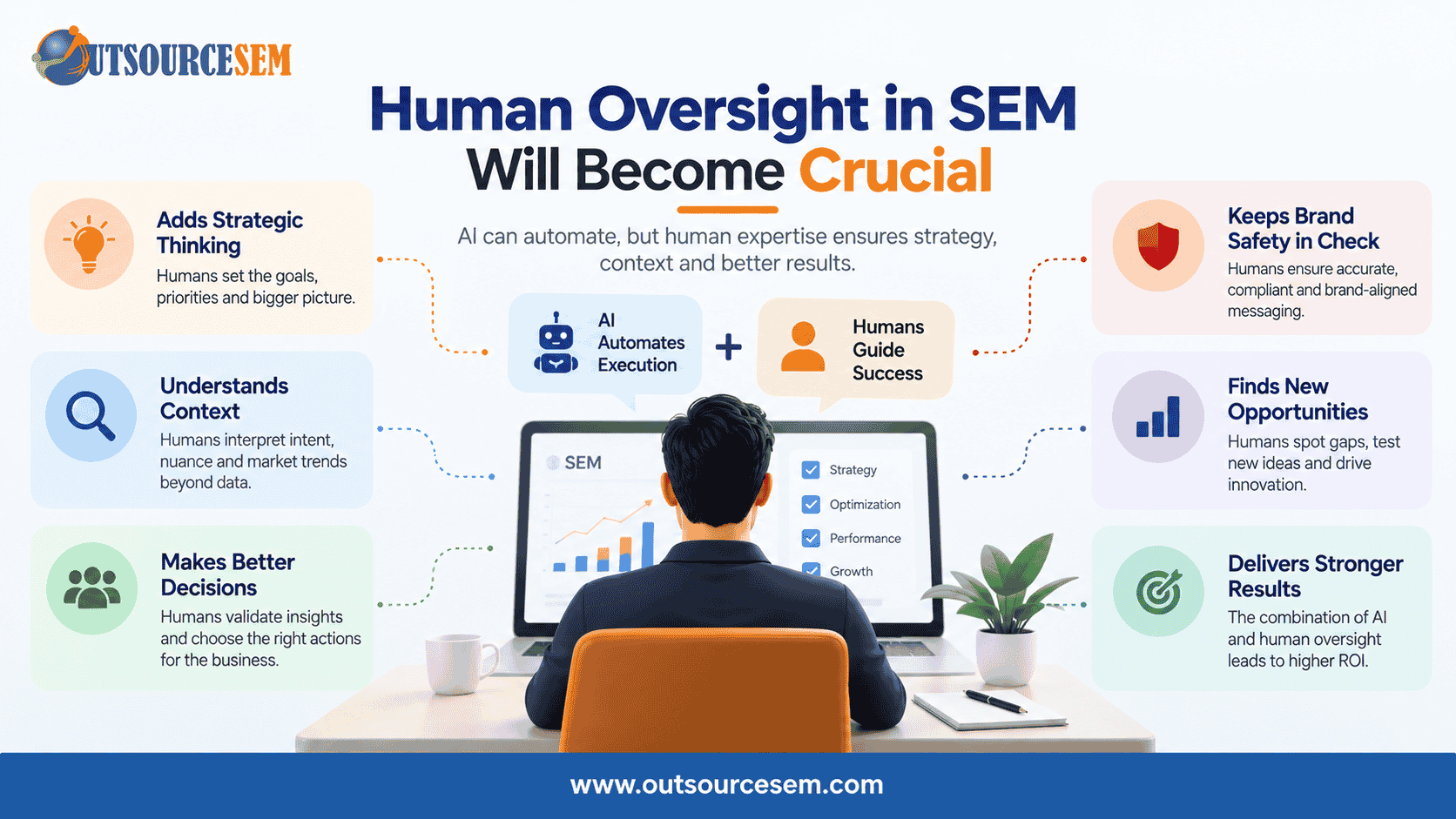
The use of greater automation does not mean the reduction of human involvement. On the contrary, it means the need for even better human oversight.
You will need human oversight in SEM because of the fact that the automated system will optimize according to the objectives and data provided by you.
For example, if you tell the system to maximize leads, then the system will increase quantity even if quality drops. If you give your qualified-lead, revenue, profitability data, then the system will work towards more meaningful goals.
Marketers have to define objectives, monitor unusual changes, challenge recommendations, and check whether automated actions correspond to the overall strategy.
They have to take into account such things as branding, customer expectations, competitive positioning, and market changes that cannot be seen in campaign data.
The role of marketers changes from manual control of every setting to the guidance of increasingly intelligent systems.
How businesses can prepare for the future of SEM
Your business doesn't have to replace the whole technology stack in order to prepare for marketing intelligence.
The first thing you have to do is improve the measurement. It is important that you track the conversions and that marketing data connects with lead quality, sales, revenue.
Next, you have to review your SEM processes and identify those repetitive processes that consume a lot of your time but operate according to the simple rules. It can be a good candidate for automation.
After that, you will improve data quality. Consistent CRM processes, proper definition of conversions, reliable reporting will make your AI systems more useful.
You have to test the AI gradually. Start with well-defined workflows, compare the results, and then continue human review before expanding automation.
Finally, you have to invest in such skills that cannot be easily replaced by automation: strategy, critical thinking, experimentation, communication, customer understanding, business analysis.
The future of SEM is about better intelligence, not more automation
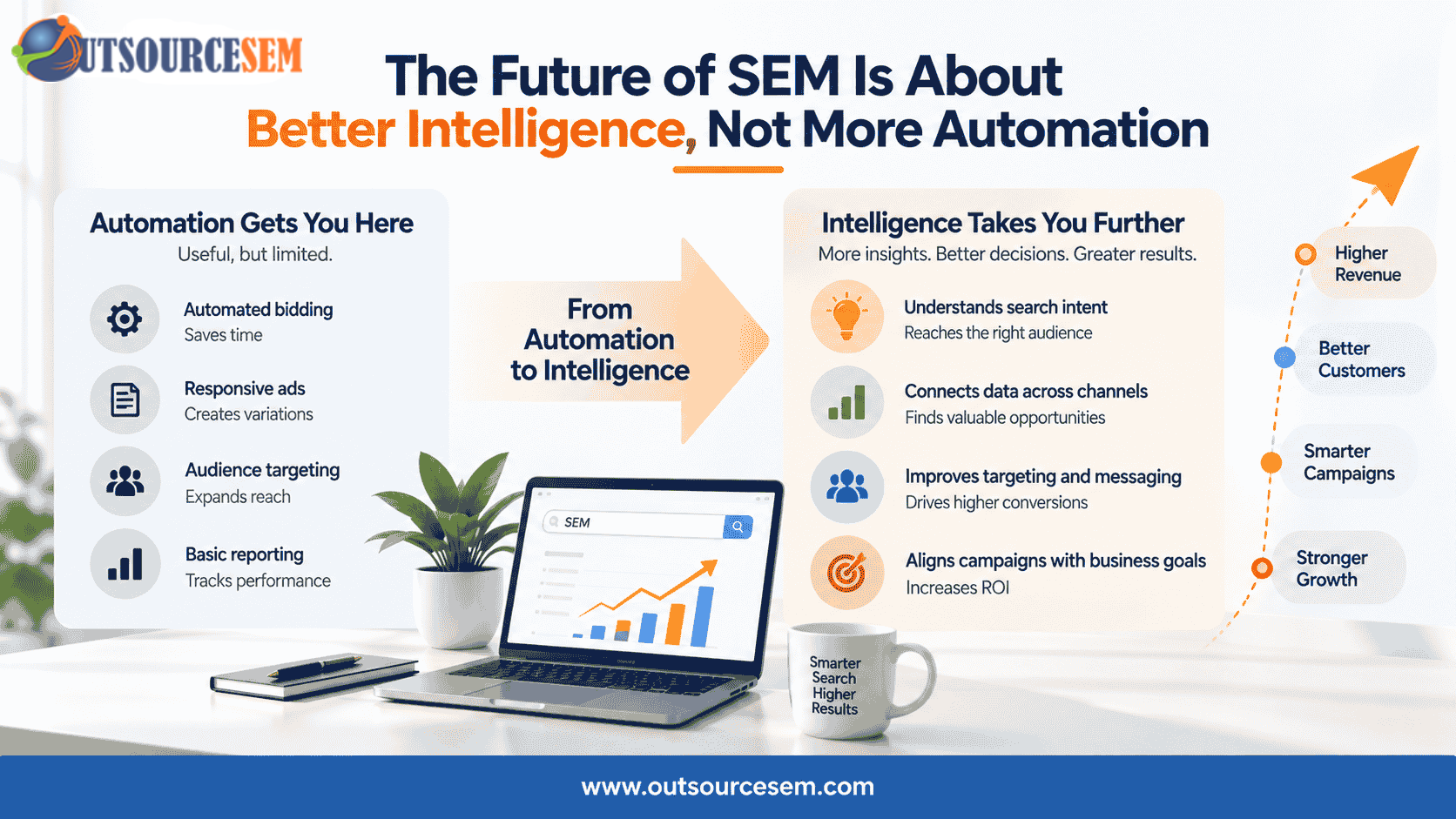
The future of search engine marketing is not about automation of more tasks. It is about turning more information into better decisions.
Marketing intelligence for SEM will help you to connect search behavior, advertising performance, customer data, and business outcomes. AI-powered search engine marketing will accelerate analysis and execution, while AI campaign optimization will help you to focus on more important signals.
On the other hand, first-party data in SEM will provide you with better context, and human oversight in SEM will remain crucial for strategy, judgment, positioning, and accountability.
The future of SEM belongs to the businesses that know the difference between automation and intelligence.
Automation makes marketing faster. Marketing intelligence can make it smarter.